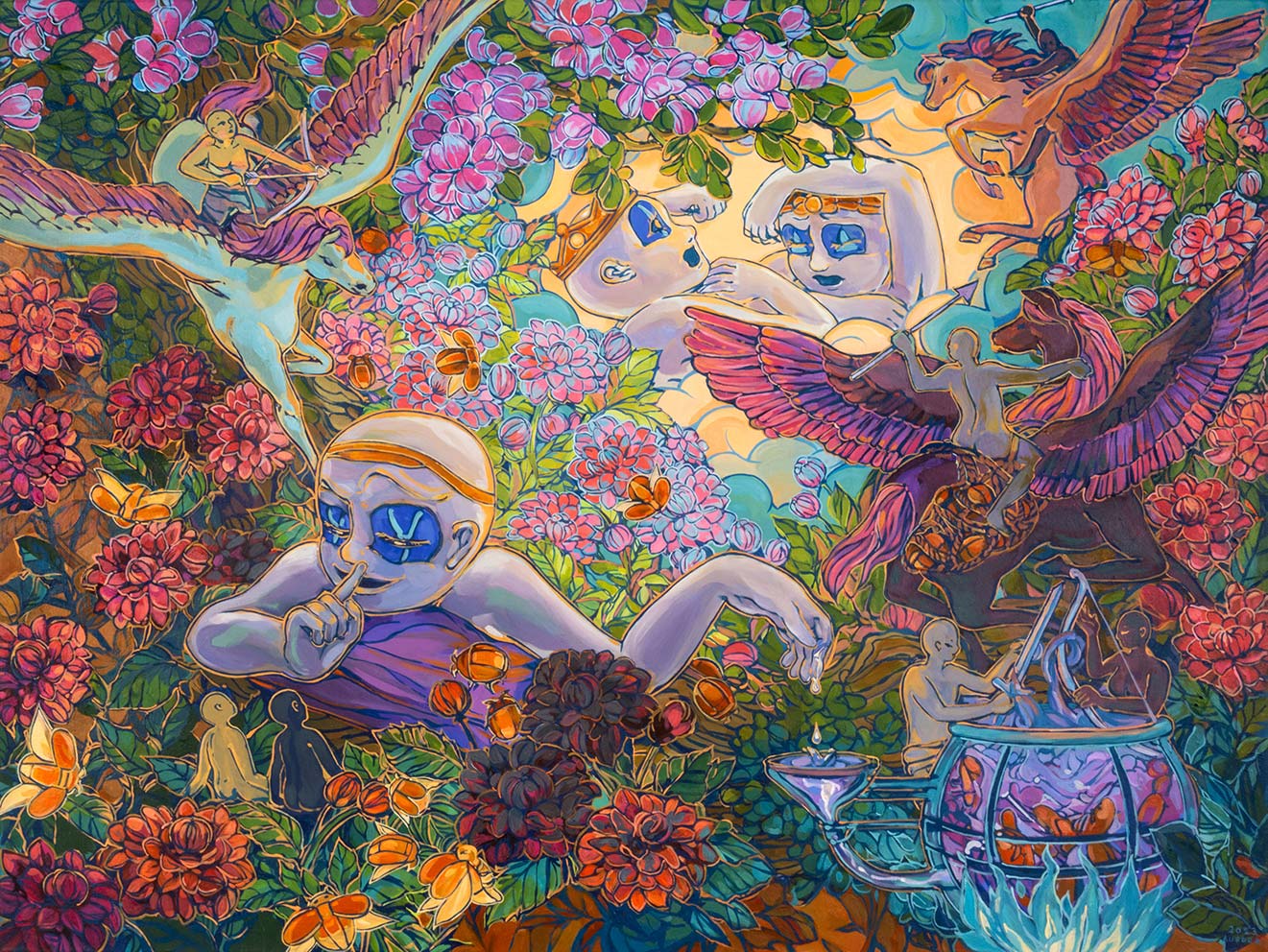
An Epic in Four Parts (Part II)
- Media : Acrylic on canvas
- Dimension : 90 x 120 cm
- Year : 2023
-
Description :
Part II is where the tension erupts. The third giant, in its attempt to remove the other giants, sneakily lend its blood to the people. “We are one and the same”, it says, “Don’t you want to fight this injustice?”. The giant’s tales, echoing that of nearly forgotten bedtime stories, united the segregated people. As they grow up, they learn how to work together to mold weapons from the giant’s given blood and ride the Pegasus to fight their masters. Dahlias bloom in celebration of this holy fight, however as one can note the ones closest to the helping giant are rotten black.
This scene, again, was directly inspired by Indonesian modern history. The way Imperial Japan swooped in during the World War II while branding itself as the heroic big brother that came to save the day, even borrowing old Javanese prophecy, was extremely captivating to the oppressed population. After years of subjugation and failed resistances, to think that one’s own blood from faraway land would liberate them was akin to fairytale coming true. While Imperial Japan had its own motivations to expand its empire and defeat the Western forces—a feat that its process inflicted even more massive damages to their so called ‘little brothers’ than the Europeans ever did—it did inadvertently lend parts of its culture (i.e, the Bushido mentality) and even provided formal infrastructures (i.e, PETA, PUTERA) that helped unite the people and nurture the pre-existing seeds of nationalism.